2025 at Native Nation Events: Part 1 – Where the Year Began

Industry Updates

2025 at Native Nation Events: Part 1 – Where the Year Began

December 26, 2025

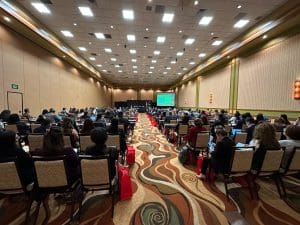
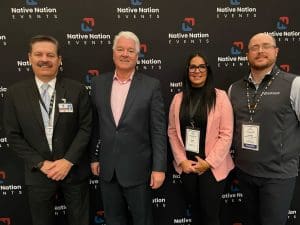
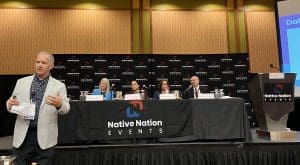
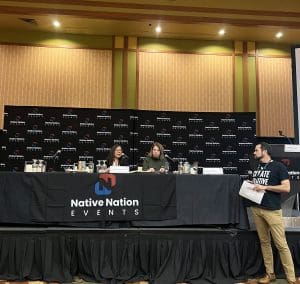
The first half of 2025 was shaped by powerful conversations, meaningful networking, and forward-thinking ideas shared across our conferences. From human resources and leadership to healthcare, economic development, emergency management, and the cannabis and hemp industry, each event brought together Tribal executives, elected officials, and industry leaders committed to learning, growing, and strengthening their communities. Here’s a look at the programs and connections that defined the start of 2025.

Human Resources Conference – Jan 2025

The year began with the 15th Annual Native American Human Resources Conference, held January 20–21 at the JW Marriott Anaheim Resort in Anaheim, CA. Pre-approved by HRCI for 10 recertification credits, the program brought HR leaders and executives together to explore timely issues, emerging strategies, and the evolving landscape of Tribal HR management.

Participants engaged in interactive panels, breakout discussions, and networking sessions focused on practical solutions and shared learning. Agenda highlights included Employment and Tribal Law Updates and Addressing Mental Health in the Workplace, providing insights that attendees could immediately apply within their organizations.

The conference received strong feedback from participants. Amparo Perrin described it as “informative, with real-life examples,” while Angie Wright appreciated the opportunity to “make connections and learn new ideas to implement.” Sponsors also praised the networking opportunities, with Polet Neresian calling it “a great chance to build relationships.” Together, these perspectives highlighted the collaborative and thoughtful atmosphere that set the tone for 2025.

Tribal Casino Executive Exchange- February 2025

From February 16–18, the 12th Annual Tribal Casino Executive Exchange brought General Managers and senior casino executives together at the Park Hyatt Aviara Resort in Carlsbad, CA. The event combined moderator-led roundtables, small-group discussions, and peer-to-peer conversations to tackle shared challenges and explore practical solutions with industry partners.

A standout moment was the golf outing at the Aviara Golf Club following Day Two sessions. Participants enjoyed friendly competition for longest drive, closest to the pin, and overall tournament champion, all on a course designed by Arnold Palmer and recognized as one of Southern California’s top resort experiences.

Attendees reflected positively on the experience, emphasizing both professional growth and relationship-building. Seth Hetherington called it “one of the most valuable” events he has attended, while Shawn Keep highlighted how “highly productive” the sessions were in fostering new connections. The Exchange once again demonstrated the value of peer-driven collaboration, leaving participants with actionable insights and a renewed commitment to excellence in Tribal gaming leadership.

June Shows 2025: One Location, Four Conferences, Endless Opportunities

Over two days in June (10–11), attendees experienced a cross-industry hub of learning and networking at Pechanga Resort Casino in Temecula, CA. Professionals could move seamlessly between sessions in emergency management, economic development, healthcare, and cannabis & hemp, while sponsors connected with experts across all four industries. This dynamic format created unparalleled opportunities for sharing ideas, exploring best practices, and building meaningful connections.

Tribal Emergency Management Conference

The Tribal Emergency Management Conference focused on enhancing preparedness, response, and resilience across Tribal communities. Sessions such as Mass Casualty: Prevention, Preparedness, and Response and Harnessing Technology and AI in Emergency Management provided participants with actionable strategies to improve emergency planning and response.

Feedback highlighted the conference’s practical impact. Scott Goodwin described it as “very educational,” and vendor Jo Miller noted the “fantastic conversations” that occurred throughout the event. Participants left equipped with new approaches to strengthen community resilience.

Native American Economic Development Conference

Celebrating its 18th year, the Economic Development Conference emphasized innovation, growth, and long-term Tribal economic resilience. Leaders shared success stories and strategic insights through panels, case studies, and interactive discussions. Sessions like Technology and Its Impact on Tribes and Turning Vision into Reality offered guidance on revenue diversification, community development, and strategic planning.

Attendees appreciated both the content and networking opportunities. Lauren Wasson praised the organization and exhibitor setup, while Avis Bill highlighted the actionable insights gained. The conference left participants with clear roadmaps to drive sustainable growth across Tribal economies.

Native American Healthcare Conference

The 15th Annual Native American Healthcare Conference brought together Tribal leaders and healthcare professionals to discuss reducing disparities, expanding preventative care, and integrating new technologies and infrastructure. Sessions such as Expanding Behavioral Health Care with New Technologies and Building a Modern Health Facility offered practical strategies and inspiration.

Participants valued the diversity of perspectives and networking opportunities. Courtney Schmidt described it as “a wonderful networking event,” while Nancy Jascula appreciated learning from leaders across different Tribal healthcare organizations. Attendees left motivated to implement strategies that could improve health outcomes in their communities.

Native American Cannabis & Hemp Conference

The 10th Native American Cannabis & Hemp Conference explored regulatory strategy, product quality, investment considerations, and market expansion within Tribal communities. Panels like State of Tribal Dispensaries and Growing Operations and Protecting Tribal Assets: Risk, Investment, and Financial Strategy offered in-depth insights from experienced practitioners.

Feedback emphasized the expertise shared by speakers. Jacob Sexton praised the informative sessions, while Yolanda Rogers noted the value of hearing firsthand experience. Attendees left empowered to navigate an evolving industry and build compliant, sustainable businesses in their communities.

Wrapping Up Part 1

The June Shows provided a dynamic, cross-industry learning experience, giving attendees unmatched opportunities to collaborate, share strategies, and explore new ideas. The first half of 2025 highlighted learning, collaboration, and meaningful connections across Tribal leadership and industry. From HR and casino leadership to healthcare, economic development, emergency management, and cannabis, thousands of professionals exchanged insights, strategies, and best practices. These events underscored the innovation, resilience, and strength of Native communities, setting the stage for an exceptional full-year experience.

Check out Part 2 for a recap of the programs and highlights from the second half of 2025.

Industry Updates

The Seventh Annual Tribal Security and Surveillance Conference: A Look Back

November 10, 2025

The Seventh Annual Tribal Security and Surveillance Conference took place October 28–29, 2025, at Pechanga Resort Casino in Temecula, California. Over two dynamic days, tribal leaders, security professionals, and industry experts came together to explore the latest strategies, technologies, and best practices shaping the future of tribal security and surveillance.

Day One: Foundations and Forward-Thinking Strategies

The conference opened with welcoming remarks from Dan O’Connor, Director of Sales at Native Nation Events, and Chase Martin, Director of Business Development at Relay, who served as a conference co-chair. They thanked sponsors and attendees for their support and set the stage for two days of conversation around the evolving landscape of tribal security and surveillance.

The first session, “Building Better Security: Lessons from the Evolution of Assessment Practices,” moderated by Andy Sperpoulos, NORAM Sales Manager at Cognitec Systems Corp, examined how risk and vulnerability assessments have evolved—from traditional methods to advanced, data-driven approaches. Panelists shared practical strategies tailored to tribal reservations and casino operations, giving attendees actionable insights to strengthen protection for assets, guests, and communities.

Following the session, attendees continued the conversation during a morning networking break, exchanging ideas, discussing key takeaways, and forming new professional connections.

Next, “Responding to Crisis: Managing Combative Patrons, Medical Emergencies, and Coordinated Security,” moderated by Tim Rogers, Business Development Manager at Relay, focused on critical crisis response strategies in tribal and casino settings. The session highlighted how advanced first responder technologies and proven best practices can be adapted to unique environments to enhance safety and ensure rapid, effective response.

After lunch, attendees chose between two sessions: “Evolving Threats, Smarter Solutions: The Future of Safety Tech,” moderated by Matt Welch, Chief Marketing Officer at Relay, or “Strengthening Casino Physical Security to Counter Rising Access Threats,” moderated by Andy Sperpoulos, NORAM Sales Manager at Cognitec Systems Corp. Both sessions offered engaging discussions and practical insights, keeping attendees actively involved and informed.

Participants then reunited for a product demonstration from ZeroEyes, “ZeroEyes Gun Detection Platform – Proactive Security for Casinos,” led by Jon Norton, Regional Vice President at ZeroEyes. The demonstration offered attendees hands-on insight into the platform, showcasing its capabilities in an engaging and informative way.

Following the demo, attendees came together for an afternoon networking break, buzzing with conversation and collaborative energy.

The day concluded with a forward-looking roundtable, “Future-Proofing Your Security Strategy,” moderated by Rob Ryan, Senior Business Development Manager at Leonardo. Experts discussed emerging technologies, innovative staff training techniques, and collaborative approaches, providing attendees with practical strategies to enhance safety and operational readiness.

The evening wrapped up with a reception sponsored by Relay, giving attendees a chance to relax, network, and continue conversations in an informal setting. Participants enjoyed connecting with peers, panelists, and sponsors, sharing insights from the day, and building relationships that would carry into Day Two.

Day Two: Innovation, Cybersecurity, and Real-World Applications

Day two began with “AI in Security and Surveillance: Navigating Innovation in High-Risk Environments,” moderated by Matthew Carrier, Vice President of Sales at eConnect. Panelists explored cutting-edge AI applications reshaping security operations in high-risk settings, addressed ethical considerations, and shared practical strategies for implementation. The panel sparked lively interaction, with attendees eager to deepen their understanding and continue exploring AI’s potential in security and surveillance.

Next, participants chose from breakout sessions, including “Casino Security and Asset Protection: Loss Prevention and Lost and Found Management,” moderated by James Mosieur, Founder/Director of 911 Cell Phone Bank, and “Modernizing Oversight: Driving Compliance and Investigative Support,” moderated by Sheryl Sterling, Senior Director, Pre-Sales at Omnigo. Both sessions offered engaging discussions and practical insights.

Following the breakout sessions, attendees came together for a morning networking break, recharging and connecting while sharing ideas and experiences.

The focus then shifted to cybersecurity with “Cybersecurity Leadership in Tribal Organizations: Strategy, Metrics, and Ransomware Readiness,” moderated by John Hirai, Solutions Architect, Western Region at Adrytech. The session highlighted how to cultivate a proactive cybersecurity culture, engage teams, enhance organizational security, and track progress through relevant KPIs.

Following the panel, Matt Anderson, Security Director of Grand Traverse Resort and Casino, shared how relevant and meaningful the session was in light of challenges currently faced across casino enterprises, citing a recent data breach and noting how several of the panel’s insights would be instrumental in guiding future security efforts.

After lunch, the focus turned to real-world experiences with “Lessons from the Frontlines: Using Data to Drive Decisions and Build Safer, Smarter Operations,” moderated by Sheryl Sterling, Senior Director, Pre-Sales at Omnigo. Panelists shared practical examples of how data-driven decision-making can uncover risks, optimize resources, and create safer, more efficient operations.

The next session, “Actionable Strategies to Detect and Disrupt Trafficking and Drug Activity,” moderated by Eddie Illko, Safety and Occupational Health Manager at the National Indian Gaming Commission, highlighted proactive strategies to combat trafficking and drug networks. Panelists emphasized the importance of collaboration among staff, security teams, and surveillance operations to protect tribal communities and gaming enterprises.

Throughout the conference, Justin Preble, Security Operations Manager at River Spirit Casino, shared his personal insights. With extensive experience attending Native Nation Events Security Conferences and hands-on familiarity with many of the technologies discussed, he offered valuable perspectives on panels he spoke on — and even on ones he didn’t. Attendees appreciated his firsthand stories and practical examples.

The conference concluded with “From Bystanders to Responders: Empowering Staff in Emergency Situations,” moderated by Neil Lillie, Public Safety Director at Black Oak Casino Resort. The session underscored staff’s pivotal role in emergency response, sharing proven strategies in crisis management, security protocols, training, and communication, all tailored to tribal and casino environments to ensure rapid, effective action.

The Seventh Annual Tribal Security & Surveillance Conference was a tremendous success, thanks to the dedication of our staff, sponsors, panelists, and attendees. Feedback from participants was overwhelmingly positive. One attendee noted that what sets this conference apart is its detailed, relevant content that doesn’t feel repetitive year after year. Participants also appreciated the smaller, more intimate setting, which proved invaluable for networking. Sponsors also noted the high level of engagement, reporting that they made numerous meaningful connections throughout the event.

We look forward to next year’s event, continuing to advance knowledge, collaboration, and innovation in tribal security and surveillance. Stay connected through our website, social media, and email updates for the latest news and announcements.

Industry Updates

Shaping the Future of Tribal Gaming: Highlights from the 17th Annual Tribal Casino & Hotel Development & Innovation Conference

November 10, 2025

Another incredible conference in the books! Held October 20–21 at Harrah’s Resort Southern California in Funner, CA, the 17th Annual Tribal Casino & Hotel Development & Innovation Conference brought together tribal leaders and industry experts to share insights and spark innovation in tribal hospitality.

Day One: Shaping the Future of Tribal Gaming

The conference kicked off with Welcome Remarks from Daniel Collins, Speaker Coordinator at Native Nation Events, who greeted attendees and introduced Chairman Steve Stallings, owner of the Harrah’s Resort property. Chairman Stallings welcomed everyone and spoke about the resort’s continued partnership and commitment to strengthening the tribal gaming community.

Attendees then joined the “Roundtable: 2025 State of Indian Gaming,” moderated by John Tahsuda, Principal at Navigators Global LLC. The expert panel featured Chairman Steve Stallings and Mark Fox, who discussed potential changes in Indian gaming over the next four years. Participants especially enjoyed hearing from Tahsuda, whose experience as former Assistant to the Secretary of the Interior brought valuable insight. A networking break followed, giving attendees the chance to connect with peers, exchange ideas, and reflect on the morning sessions. Between sessions, attendees also had time to network with exhibitors, providing valuable opportunities to make connections and generate leads.

Momentum continued with “Best Practices for New Builds and Renovation Projects,” moderated by Luke Jumper, President of TBE Architects, which offered guidance on construction considerations and strategies for successful new builds and renovations. After lunch, participants attended “Diving Deeper: Examining Which Design Decisions Could Make or Break Your New Space,” also moderated by Jumper, which provided insights into avoiding small—but potentially costly—design mistakes.

An afternoon networking break allowed attendees to continue building relationships and sharing insights. Justin Sherwood of Michaels Furnishings said the conference was “an excellent opportunity to network with industry leaders and owners.” The connections made during these breaks helped strengthen relationships and foster collaboration throughout the conference.

Learning resumed with “Diversifying Your Revenue Stream with Non-Gaming Amenities,” moderated by Mike Carter, Director of Client Development at TBE Architects. Participants really enjoyed the discussion on potential non-gaming amenities, such as concerts, activities, and sports partnerships, and left the session with plenty of actionable ideas.

Day One concluded with “Betting on Intelligence: AI’s Role in the Future of Casino Gaming,” moderated by Kelly Popp, Vice President of Business at SHR Group. Attendees explored real-world applications of AI, emerging technologies, and the ethical considerations of adopting AI in casino operations.

Day Two: Continuing the Momentum

Day Two began with participants energized and ready for another full day of learning, networking, and innovation. The “Casino Executive Roundtable,” moderated by Mike Carter, gave executives the opportunity to address pressing questions, share insights on new technologies, and discuss innovations heading into 2025. Another networking break followed, providing attendees additional opportunities to connect and exchange takeaways.

The conference continued with the highly anticipated “Driving Your Guest Engagement Through the Power of AI,” moderated by Scott Nicholson, Senior Vice President of Strategic Partnerships at Imagine This. The session focused on leveraging AI call technology to enhance player engagement and response. Participants loved the AI demonstration and left the session highly engaged, with plenty of practical ideas for using AI to their advantage.

After lunch, attendees participated in an exclusive product demonstration from Royal Basket Trucks. Javier Perez, Vice President of Sales and Marketing, showcased innovative solutions to improve process efficiency, including the motorized housekeeping cart and a variety of Sorted, Collected, and Transported solutions.

The afternoon sessions continued with “What is Your Overall Guest Experience?” moderated by Dan Spears, Vice President of Industry Relations and Licensing at Broadcast Music, Inc., which explored strategies to optimize the guest experience and ensure operations run smoothly. The event concluded with “The Five Pillars of Data Resilience,” moderated by John Tahsuda, where experts discussed how backup, recovery, portability, security, and intelligence can protect tribal operations, mitigate cyber risks, and strengthen long-term economic sustainability.

The 17th Annual Tribal Casino & Hotel Development & Innovation Conference was a tremendous success thanks to the dedication of our on-site staff, sponsors, panelists, and attendees. Participants loved the event, with Amanda from the Holiday Inn Express Natl’ Park Area Yurok Tribe calling it “a great conference for connecting with resources,” Jesse Ward, General Manager of GTB EDC Leelanau Sands Casino, noting the “good and relevant content,” and Dennis Garcia, General Manager of the San Felipe Pueblo, describing it as “worthwhile.” Their feedback reflects what makes this conference so impactful year after year—valuable connections, insightful discussions, and a shared commitment to innovation in tribal gaming and hospitality.

 We look forward to the 18th Annual Conference, continuing to foster growth, knowledge, networking, and innovation for the design and development of tribal-owned casinos, hotels, and resorts. Stay updated on upcoming conferences via our website, social media channels, and email communications.

Industry Updates

Key Takeaways from the 14th Annual Native American Human Resources Conference

February 19, 2024

Delegates gathered from far and wide at the Pechanga Resort Casino in late January for the 14th Annual Native American Human Resources Conference. Over 200 representatives from tribal enterprises and over 100 industry partners participated in two days of sessions, networking, and fun. This year, attendees received 11 HRCI credit hours towards  aPHR™, aPHRi™, PHR®, PHRca®, SPHR®, GPHR®, PHRi™ and SPHRi™ designations.

The conference kicked off with an inspiring keynote address that discussed why HR leaders need to get themselves a seat at the table with the rest of the C-suite when it’s time for strategic business decisions to be made. The session brought the energy and set the tone for the exciting discoveries and conversations that were about to unfold over the next two days.

Next, the conference moved into the highly-anticipated session that discussed strategies for rebuilding and recruiting your workforce. Ruth Zaldivar, Human Resources Director from Muscogee Nation Gaming Enterprises, proudly discussed her team’s efforts to create more awareness about current job openings outside of typical platforms. She said they hired a social media manager to create videos about current job openings and event showcase content about seasonal activities. Before this newly-created position, there were no employment-specific social sites for the Muscogee Nation, and now they have a tremendous online presence with a pipeline full of candidates.

Before attendees broke for lunch, “Success Stories Behind Employee Longevity” delivered answers to some hard-hitting questions. Crystal Hill, National Director of Tribal Services of USI Consulting, Inc., remarked that specifically in tribal businesses, community recognition means the most and is the biggest factor in employee retention. Whether that’s a ceremony in front of other employees/tribal members or a callout in a tribal publication, it helps boost morale, and the employee feels like they are recognized beyond the workplace.

After lunch, attendees broke into sessions for more focused learning, choosing their own adventures. Preparing the Future of Your Organization’s session on succession planning to ensure a forward-thinking, structured process is in place to develop individuals within the organization who are driven to succeed in key leadership roles. Cynthia Jaramillo, Senior Human Resources Manager from Isleta Resort and Casino, remarked that it’s important to:

  • Identify competencies for key positions.
  • Develop a training program with mentors who provide hands-on job shadowing
  • When interviewing interested employees, address career plans and how your organization can support them
  • Consistently evaluate your program effectiveness

Day one ended with a can’t-miss roundtable on generational differences led by HR executives. Panelists shared humorous yet heartfelt anecdotes about their organizations and how their diverse workforces are learning to work together through all of their differences. An Tran, Vice President of Human Resources of the San Manual Band of Mission Indians, recommended to “[not] ignore commonalities between generations. There’s a tendency to have stereotypes and preconceived notions of individuals, which can negatively affect your organization.”

We kicked off Day Two refreshed and ready to learn all about AI! Julio Nunez, Human Resources Director from the Osage Nation, shared some very candid sentiments that left the crowd wanting more. He opened by defining AI: “Narrow AI and Strong AI. Narrow AI is what we’re mostly using right now, with Alexa and our iPhones. Strong AI is what Hollywood makes movies about AI becoming sentient. We are not quite there yet.” He then stated that AI can assist in personalized employee training once teams submit the correct prompts. Communication styles, personality tests, general likes, and dislikes can be input, and then custom training can be curated for a new hire. AI can enhance decision-making and HR policies by making data-driven decisions, predictive analytics for turnover, customized learning and development, and strategic workforce planning, but AI can never replace the human element of HR.

The tough topics didn’t stop there; next, we discussed the pros and cons of remote, hybrid, and in-person work and how enterprises can make it work for all employees. For this group, it’s a tricky subject as some parts of the team can work remotely while others must be in person or are customer-facing, and it can create a rift amongst smaller teams. Lynn Faraca-Bond, Senior Vice President of Human Resources from the San Manuel Band of Mission Indians, believes that if you manage a team that works in person, then you, as the leader, need to be in-person, too. Patrick Higgins, Senior Director of Human Resources for the Central Council of the Tlingit and Haida Tribes, had an interesting viewpoint, stating that they prioritize hiring tribal citizens and that regardless of timezone, all personnel must work on Alaskan time. He stated that they will continue to hire a remote workforce to support their notion of prioritizing the hiring of tribal members. 

After lunch, attendees went deep into discussion on the crowd-favorite topic, Employment Law Updates. Kehl Van Winkle from MCTLAW shared an in-house perspective, stating that he tries to approach things from a policy-first perspective. He shared with the audience that if you know the source of the laws that apply, you will have a healthier HR department and need legal departments less.

After this we moved into our discussion on Mental Health in the workplace and HR teams’ role in helping employees. This discussion was lively and extremely heartfelt, with panelists sharing stories of how progressive policies positively impacted their employees. Teresita Cowan, Benefits Manager from Muscogee Nation Gaming Enterprises, shared how HR professionals have a vital role to play in promoting mental health wellness at organizational and individual levels and that individual performance really impacts the organization. As HR leaders, we want to make sure we create an environment where someone struggling with mental health can come to HR and get the resources they need.

We wrapped up the 14th Annual Native American Human Resources Conference with the can’t-miss roundtable of HR Executives – Leading Through Challenging Times. Gary Burrs, Executive Officer of Human Resources from Choctaw Nation of Oklahoma, shared, “Human capital is the one thing organizations can do to be different from each other. It is important to understand that casinos sell the exact same product, and the human interaction is different.” A powerful thought to close out the conference. Many attendees came from a gaming-based business, asking the question of how they can make their team stand out. The answer was easy: it’s the people. They drive your success, build your culture, and are your greatest asset.

Stay tuned in the coming weeks as we announce the dates and location for the 15th Annual Native American Human Resources Conference. If you miss joining us this year, we sincerely hope you join us next year!

Industry Updates

The 3 Biggest Challenges to Securing Casino Floors

October 3, 2023

Casino floors are high-stakes environments, ripe with potential safety and financial risks—money is continuously changing hands, multiple events are occurring simultaneously, and patrons can become emotional after wins, losses, and consumption of alcohol. Unless surveillance and security departments have their eyes on the right screen at the right moment, cheating and endangerment can go unnoticed.

Read below for the three biggest challenges of securing casino floors: 

1) Highly emotional reactions

Risk and reward are predominant themes within a casino, increasing the likelihood of heated emotional responses. Following a big loss, an angry patron might be more likely to cause harm to facilities, assets, or other patrons. The consumption of alcohol—often in excess—also increases the possibility of disorderly conduct. Behavioral unknowns present a formidable challenge for surveillance and security teams who need to be prepared to handle any situation at any time.

Fortunately, there are tools available to help predict and plan for various outcomes and effectively prevent future incidents from occurring. Fully integrated software featuring built-in data analysis allows surveillance teams to spend less time collecting, managing, and reporting data, and more time gaining insights into trends. Mitigating unknowns enables surveillance and security teams to devise effective strategies for improving the prevention of—and response to—incidents.

2) Patterns of theft and cheating

Theft and cheating are risks in every game on the casino floor, even slot machines. Patrons may attempt to steal unattended winnings or chips or team up to count cards. By reporting on a patron’s wins, losses, and interactions—within the property and with other guests or staff—surveillance personnel can track behavioral trends to determine whether the suspect is playing safely and legally or, in fact, stealing from the casino. But traditional manual reporting can make this a daunting task.

Software that records data and stores associated media files helps surveillance personnel report, quantify, and spot trends more readily. For example, photos of banned or self-excluded patrons enable security guards to identify these individuals at the gate and escort them out before they enter. Likewise, if there is a pattern of patrons attempting to leave from a certain exit without paying, data generated from these reports will help identify the need for increased security in that area.

Regardless of the scenario, data-enabled reporting software can help surveillance and security teams save time, improve fairness, and prevent loss.

3) Liability and lawsuits

Maintaining complete and accurate incident reports helps reduce the risk of liability and lawsuits. Recording incident details and actions taken to resolve the situation—and prevent recurrence—provides a complete audit trail that can be referenced to mitigate liability should legal action be taken.

Internal theft can create a different type of liability issue. In the event an employee is fired for stealing, maintaining detailed reports of their suspicious behavior can protect your organization against a wrongful termination lawsuit.

Incident reporting systems can also help your gaming operation adhere to Gaming Commission requirements. Having a comprehensive, fully integrated solution in place ensures compliance with industry standards and government regulations.

Ready to learn more about Omnigo’s comprehensive suite of gaming and hospitality security solutions? Contact us to request a demo.

Industry Updates

Wrapping Up the Fourth Annual Gaming and Hospitality Security Conference

October 27, 2022

From October 24-25, over 300 professionals gathered at the Palms Casino Resort for two days of sessions discussing one of the most important aspects of running any business: security. In today’s uncertain world, having plans to keep employees and patrons safe is paramount, and sessions were designed with just that in mind.

A Packed House With a Packed Agenda

Attendees started the conference with an inspiring keynote led by Native Nation Events’ Coach Jim Stroker. They then immediately went into a hard-hitting session, discussing the latest advances in technology and surveillance, moderated by Edwin Coello (Director of Public Safety and Data Governance, FaceFirst). In this session, panelists talked about advancements in technology for baggage screenings, metal detectors, facial recognition software, and how their patrons can feel safe while on their properties.

Attendees gathered at the Palms Casino Resort for the Fourth Annual Gaming and Hospitality Security Conference.

Security Sessions With Real-World Applications

Attendees also enjoyed takeaways from sessions centered around preparation and response to natural disasters. There, Scott Thomas (National Director of Sales for Signature Brands, Genetec) moderated with presenters David Cook (Chief Security Officer, Muscogee Nation Gaming Enterprise), Walter Gunn (Director of Safety and Security, Tachi Palace Casino), and Brian Hunt (Security Manager, Twin Pine Casino) shared their experiences of not only preparing for the worst but experiencing it first hand. The panelists had a riveting discussion on the importance of developing and implementing an Emergency Action Plan, training staff for natural disasters, and how government agencies can support the team in relief efforts.

Preparation and Response to a Natural Disaster panel from left to right Walter Gunn, Brian Hunt, David Cook, and Scott Thomas.

Another session our attendees tremendously enjoyed and want to see additional coverage on is situational awareness and de-escalation best practices. Brian Hunt (Security Manager, Twin Pine Casino) remarked that “knowing how to verbally de-escalate a situation is paramount in preventing problems.” Susan Persell (Security Operations Manager, The Mill Casino Hotel and RV Park) commented that “[knowing how to] de-escalate without hands-on. Why use hands at all with the negative results it causes?” Continuing to explore this topic and providing insights will be paramount for security professionals for years to come.

The Fourth Annual Gaming and Hospitality Security Conference was another wildly successful event, thanks to our on-site staff, sponsors, panelists and moderators, and attendees’ efforts. The testimonials from attendees showcase the value this event brings year after year.  We’re already looking forward to the fifth annual gathering, and we can’t wait to produce another impactful program. Sign up to join our mailing list to stay in the loop when we announce our conferences, receive special pricing notifications, and learn more about the sessions and presenters who bring our conferences to life.

Industry Updates

The Complete New Orleans Experience During The Tribal General Manager and Casino Executive Exchange

June 20, 2022

The Ninth Annual Tribal General Manager and Casino Executive Exchange was a wild success! Held at the Royal Sonesta Hotel in the heart of Bourbon Street, our attendees experienced New Orleans to the fullest. Hurricanes served at the bar where they were created, a private Second Line brass band with a parade route down Bourbon Street, culminating in a golf outing WITH an alligator sighting at TPC Louisiana. What could be better? Oh right, an actual conference too.

The Monday Night Reception

We kicked off the festivities with a Second Line brass band who escorted us down Bourbon Street to our Monday Night Reception in style, courtesy of FABICash and Imagine This. Umbrellas, beads, drinks in hand, and souvenir napkins to twirl along the parade route set the stage for a roaring good time at the legendary Pat O’Brien’s.

Impactful Conference Content

Don’t think all that happened was fun and games; we held sessions on the hard-hitting topics the executives wanted to hear. Attendees kicked off the conference with Dr. Alan Meister discussing the state of the economy and how it will impact gaming. Talking points included current inflation, ongoing supply chain issues, labor shortages, and interest rates increasing. One of the highlights of our conferences is our roundtables, led by current Tribal leaders in their given field.

At the Casino Executive Roundtable, our presenters addressed the most significant challenges they’ll face this year. One of the more vivid discussion points included the changes in casino operations and how they’re assisting their employees and guests to a “return to normalcy.” At Native Nation Events, we pride ourselves on creating agendas with sessions that address attendees’ top concerns.

Wrapping Up with the Annual Golf Outing

We ended the exchange in style with a golf outing to TPC Louisiana. Tribal ambassadors paired with Forum Partners for an afternoon of lively competition. The only question is, was the match the other teams or the alligators emerging from the bodies of water on the course? The verdict is still out.

https://www.youtube.com/shorts/_l-7MKomZa0

Stay tuned as we announce the 10th Annual Tribal General Manager and Casino Executive Exchange in the coming weeks. Based on this year’s success, it will be a hard act to follow, but you know we will make the 10th gathering one to remember. Can’t wait for the next conference? Check out our Events and Conferences page; we hope to see you there!

Industry Updates

Imagine This – The Secret Sauce for Casino Operators

May 12, 2022

Want to know the latest “secret sauce” innovative casino operators are working with Imagine This on to increase revenue and profit? The most common questions our clients are asking us for 2022 and forward, are to find ways to increase revenue and profit.

Player Fatigue
When do we change up what we are doing to keep our offers fresh? Imagine This has a national data center, where we look at trends in multiple demographics and markets all over North America. We have discovered valuable information that can help your marketing team make evidence-based decisions. Many of these findings rebuke age-old assumptions, which is important to improve marketing strategies.


Trip Frequency
Can we really continue to expect players to increase their visits? The newest marketing approach is demonstrating overwhelmingly that answer is YES. The data supports it. We have several clients now taking advantage of our Casino Continuity Program by running two programs each month. In short, increasing the opportunity for players to come in multiple times each week. Let us share how you can take advantage of this opportunity risk-free using our variable cost and self-funding approach.

Player Loyalty – Competition vs. Attrition.
How truly loyal are our players? Where do they go when they don’t come in as often? An astounding discovery we have made is that in one year, there is a significant amount of player attrition. “Bread and butter “ players, who we assume are loyal, simply vanish from offer groups month over month and year over year. Our national data center shows the average annual attrition ranges from 40%-70%. Did they go to the competition? Did they stop gambling? Did they move? There are many reasons. The key reason this is important is: if you are experiencing high attrition levels, you can look at your reinvestment strategies, possibly entertain new marketing approaches, and look for innovative ways to reengage those players.

Many of the answers to these questions can be found in your data.

Analyzing the data helps make evidence-based decision-making.

Let Imagine This share how we work with our clients and why they use our analytical methods to answer these questions.

Imagine This is a full-service marketing and analytics company with a singular focus: Help our clients maximize revenue and profit on the money they invest in us. We look forward to seeing you!

Come visit us at the Ninth Annual Tribal General Manager & Casino Executive Exchange!
May 16-17, 2022
Native Nation Events
Royal Sonesta Hotel in New Orleans, LA