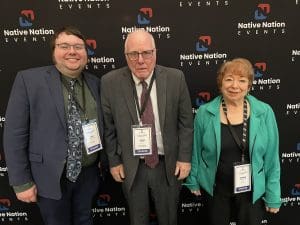
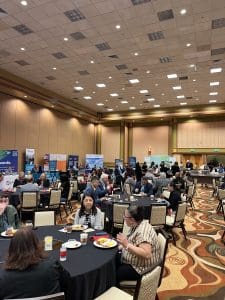
2025 at Native Nation Events: Part 1 – Where the Year Began

Industry Updates

2025 at Native Nation Events: Part 1 – Where the Year Began

December 26, 2025

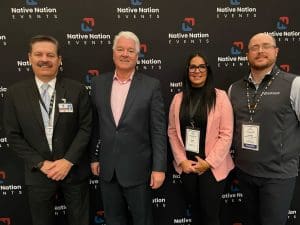
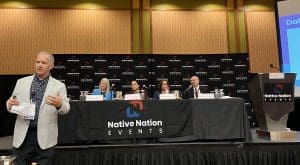
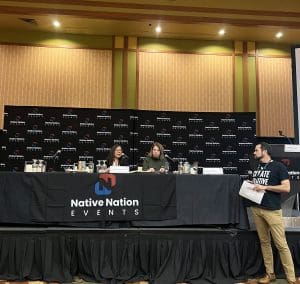
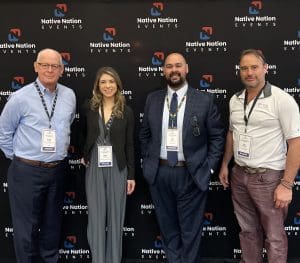
The first half of 2025 was shaped by powerful conversations, meaningful networking, and forward-thinking ideas shared across our conferences. From human resources and leadership to healthcare, economic development, emergency management, and the cannabis and hemp industry, each event brought together Tribal executives, elected officials, and industry leaders committed to learning, growing, and strengthening their communities. Here’s a look at the programs and connections that defined the start of 2025.

Human Resources Conference – Jan 2025

The year began with the 15th Annual Native American Human Resources Conference, held January 20–21 at the JW Marriott Anaheim Resort in Anaheim, CA. Pre-approved by HRCI for 10 recertification credits, the program brought HR leaders and executives together to explore timely issues, emerging strategies, and the evolving landscape of Tribal HR management.

Participants engaged in interactive panels, breakout discussions, and networking sessions focused on practical solutions and shared learning. Agenda highlights included Employment and Tribal Law Updates and Addressing Mental Health in the Workplace, providing insights that attendees could immediately apply within their organizations.

The conference received strong feedback from participants. Amparo Perrin described it as “informative, with real-life examples,” while Angie Wright appreciated the opportunity to “make connections and learn new ideas to implement.” Sponsors also praised the networking opportunities, with Polet Neresian calling it “a great chance to build relationships.” Together, these perspectives highlighted the collaborative and thoughtful atmosphere that set the tone for 2025.

Tribal Casino Executive Exchange- February 2025

From February 16–18, the 12th Annual Tribal Casino Executive Exchange brought General Managers and senior casino executives together at the Park Hyatt Aviara Resort in Carlsbad, CA. The event combined moderator-led roundtables, small-group discussions, and peer-to-peer conversations to tackle shared challenges and explore practical solutions with industry partners.

A standout moment was the golf outing at the Aviara Golf Club following Day Two sessions. Participants enjoyed friendly competition for longest drive, closest to the pin, and overall tournament champion, all on a course designed by Arnold Palmer and recognized as one of Southern California’s top resort experiences.

Attendees reflected positively on the experience, emphasizing both professional growth and relationship-building. Seth Hetherington called it “one of the most valuable” events he has attended, while Shawn Keep highlighted how “highly productive” the sessions were in fostering new connections. The Exchange once again demonstrated the value of peer-driven collaboration, leaving participants with actionable insights and a renewed commitment to excellence in Tribal gaming leadership.

June Shows 2025: One Location, Four Conferences, Endless Opportunities

Over two days in June (10–11), attendees experienced a cross-industry hub of learning and networking at Pechanga Resort Casino in Temecula, CA. Professionals could move seamlessly between sessions in emergency management, economic development, healthcare, and cannabis & hemp, while sponsors connected with experts across all four industries. This dynamic format created unparalleled opportunities for sharing ideas, exploring best practices, and building meaningful connections.

Tribal Emergency Management Conference

The Tribal Emergency Management Conference focused on enhancing preparedness, response, and resilience across Tribal communities. Sessions such as Mass Casualty: Prevention, Preparedness, and Response and Harnessing Technology and AI in Emergency Management provided participants with actionable strategies to improve emergency planning and response.

Feedback highlighted the conference’s practical impact. Scott Goodwin described it as “very educational,” and vendor Jo Miller noted the “fantastic conversations” that occurred throughout the event. Participants left equipped with new approaches to strengthen community resilience.

Native American Economic Development Conference

Celebrating its 18th year, the Economic Development Conference emphasized innovation, growth, and long-term Tribal economic resilience. Leaders shared success stories and strategic insights through panels, case studies, and interactive discussions. Sessions like Technology and Its Impact on Tribes and Turning Vision into Reality offered guidance on revenue diversification, community development, and strategic planning.

Attendees appreciated both the content and networking opportunities. Lauren Wasson praised the organization and exhibitor setup, while Avis Bill highlighted the actionable insights gained. The conference left participants with clear roadmaps to drive sustainable growth across Tribal economies.

Native American Healthcare Conference

The 15th Annual Native American Healthcare Conference brought together Tribal leaders and healthcare professionals to discuss reducing disparities, expanding preventative care, and integrating new technologies and infrastructure. Sessions such as Expanding Behavioral Health Care with New Technologies and Building a Modern Health Facility offered practical strategies and inspiration.

Participants valued the diversity of perspectives and networking opportunities. Courtney Schmidt described it as “a wonderful networking event,” while Nancy Jascula appreciated learning from leaders across different Tribal healthcare organizations. Attendees left motivated to implement strategies that could improve health outcomes in their communities.

Native American Cannabis & Hemp Conference

The 10th Native American Cannabis & Hemp Conference explored regulatory strategy, product quality, investment considerations, and market expansion within Tribal communities. Panels like State of Tribal Dispensaries and Growing Operations and Protecting Tribal Assets: Risk, Investment, and Financial Strategy offered in-depth insights from experienced practitioners.

Feedback emphasized the expertise shared by speakers. Jacob Sexton praised the informative sessions, while Yolanda Rogers noted the value of hearing firsthand experience. Attendees left empowered to navigate an evolving industry and build compliant, sustainable businesses in their communities.

Wrapping Up Part 1

The June Shows provided a dynamic, cross-industry learning experience, giving attendees unmatched opportunities to collaborate, share strategies, and explore new ideas. The first half of 2025 highlighted learning, collaboration, and meaningful connections across Tribal leadership and industry. From HR and casino leadership to healthcare, economic development, emergency management, and cannabis, thousands of professionals exchanged insights, strategies, and best practices. These events underscored the innovation, resilience, and strength of Native communities, setting the stage for an exceptional full-year experience.

Check out Part 2 for a recap of the programs and highlights from the second half of 2025.
Industry Updates

Key Takeaways from the 14th Annual Native American Human Resources Conference

February 19, 2024

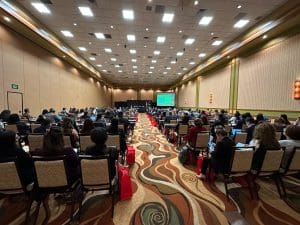
Delegates gathered from far and wide at the Pechanga Resort Casino in late January for the 14th Annual Native American Human Resources Conference. Over 200 representatives from tribal enterprises and over 100 industry partners participated in two days of sessions, networking, and fun. This year, attendees received 11 HRCI credit hours towards  aPHR™, aPHRi™, PHR®, PHRca®, SPHR®, GPHR®, PHRi™ and SPHRi™ designations.

The conference kicked off with an inspiring keynote address that discussed why HR leaders need to get themselves a seat at the table with the rest of the C-suite when it’s time for strategic business decisions to be made. The session brought the energy and set the tone for the exciting discoveries and conversations that were about to unfold over the next two days.

Next, the conference moved into the highly-anticipated session that discussed strategies for rebuilding and recruiting your workforce. Ruth Zaldivar, Human Resources Director from Muscogee Nation Gaming Enterprises, proudly discussed her team’s efforts to create more awareness about current job openings outside of typical platforms. She said they hired a social media manager to create videos about current job openings and event showcase content about seasonal activities. Before this newly-created position, there were no employment-specific social sites for the Muscogee Nation, and now they have a tremendous online presence with a pipeline full of candidates.

Before attendees broke for lunch, “Success Stories Behind Employee Longevity” delivered answers to some hard-hitting questions. Crystal Hill, National Director of Tribal Services of USI Consulting, Inc., remarked that specifically in tribal businesses, community recognition means the most and is the biggest factor in employee retention. Whether that’s a ceremony in front of other employees/tribal members or a callout in a tribal publication, it helps boost morale, and the employee feels like they are recognized beyond the workplace.

After lunch, attendees broke into sessions for more focused learning, choosing their own adventures. Preparing the Future of Your Organization’s session on succession planning to ensure a forward-thinking, structured process is in place to develop individuals within the organization who are driven to succeed in key leadership roles. Cynthia Jaramillo, Senior Human Resources Manager from Isleta Resort and Casino, remarked that it’s important to:

  • Identify competencies for key positions.
  • Develop a training program with mentors who provide hands-on job shadowing
  • When interviewing interested employees, address career plans and how your organization can support them
  • Consistently evaluate your program effectiveness

Day one ended with a can’t-miss roundtable on generational differences led by HR executives. Panelists shared humorous yet heartfelt anecdotes about their organizations and how their diverse workforces are learning to work together through all of their differences. An Tran, Vice President of Human Resources of the San Manual Band of Mission Indians, recommended to “[not] ignore commonalities between generations. There’s a tendency to have stereotypes and preconceived notions of individuals, which can negatively affect your organization.”

We kicked off Day Two refreshed and ready to learn all about AI! Julio Nunez, Human Resources Director from the Osage Nation, shared some very candid sentiments that left the crowd wanting more. He opened by defining AI: “Narrow AI and Strong AI. Narrow AI is what we’re mostly using right now, with Alexa and our iPhones. Strong AI is what Hollywood makes movies about AI becoming sentient. We are not quite there yet.” He then stated that AI can assist in personalized employee training once teams submit the correct prompts. Communication styles, personality tests, general likes, and dislikes can be input, and then custom training can be curated for a new hire. AI can enhance decision-making and HR policies by making data-driven decisions, predictive analytics for turnover, customized learning and development, and strategic workforce planning, but AI can never replace the human element of HR.

The tough topics didn’t stop there; next, we discussed the pros and cons of remote, hybrid, and in-person work and how enterprises can make it work for all employees. For this group, it’s a tricky subject as some parts of the team can work remotely while others must be in person or are customer-facing, and it can create a rift amongst smaller teams. Lynn Faraca-Bond, Senior Vice President of Human Resources from the San Manuel Band of Mission Indians, believes that if you manage a team that works in person, then you, as the leader, need to be in-person, too. Patrick Higgins, Senior Director of Human Resources for the Central Council of the Tlingit and Haida Tribes, had an interesting viewpoint, stating that they prioritize hiring tribal citizens and that regardless of timezone, all personnel must work on Alaskan time. He stated that they will continue to hire a remote workforce to support their notion of prioritizing the hiring of tribal members. 

After lunch, attendees went deep into discussion on the crowd-favorite topic, Employment Law Updates. Kehl Van Winkle from MCTLAW shared an in-house perspective, stating that he tries to approach things from a policy-first perspective. He shared with the audience that if you know the source of the laws that apply, you will have a healthier HR department and need legal departments less.

After this we moved into our discussion on Mental Health in the workplace and HR teams’ role in helping employees. This discussion was lively and extremely heartfelt, with panelists sharing stories of how progressive policies positively impacted their employees. Teresita Cowan, Benefits Manager from Muscogee Nation Gaming Enterprises, shared how HR professionals have a vital role to play in promoting mental health wellness at organizational and individual levels and that individual performance really impacts the organization. As HR leaders, we want to make sure we create an environment where someone struggling with mental health can come to HR and get the resources they need.

We wrapped up the 14th Annual Native American Human Resources Conference with the can’t-miss roundtable of HR Executives – Leading Through Challenging Times. Gary Burrs, Executive Officer of Human Resources from Choctaw Nation of Oklahoma, shared, “Human capital is the one thing organizations can do to be different from each other. It is important to understand that casinos sell the exact same product, and the human interaction is different.” A powerful thought to close out the conference. Many attendees came from a gaming-based business, asking the question of how they can make their team stand out. The answer was easy: it’s the people. They drive your success, build your culture, and are your greatest asset.

Stay tuned in the coming weeks as we announce the dates and location for the 15th Annual Native American Human Resources Conference. If you miss joining us this year, we sincerely hope you join us next year!