2025 at Native Nation Events: Part 1 – Where the Year Began

Industry Updates

2025 at Native Nation Events: Part 1 – Where the Year Began

December 26, 2025

The first half of 2025 was shaped by powerful conversations, meaningful networking, and forward-thinking ideas shared across our conferences. From human resources and leadership to healthcare, economic development, emergency management, and the cannabis and hemp industry, each event brought together Tribal executives, elected officials, and industry leaders committed to learning, growing, and strengthening their communities. Here’s a look at the programs and connections that defined the start of 2025.

Human Resources Conference – Jan 2025

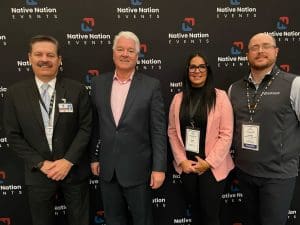
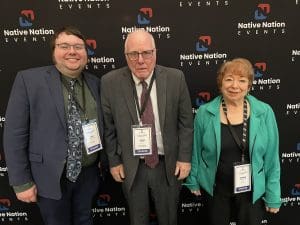
The year began with the 15th Annual Native American Human Resources Conference, held January 20–21 at the JW Marriott Anaheim Resort in Anaheim, CA. Pre-approved by HRCI for 10 recertification credits, the program brought HR leaders and executives together to explore timely issues, emerging strategies, and the evolving landscape of Tribal HR management.

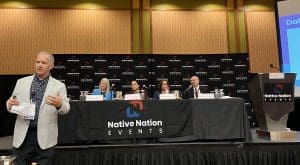
Participants engaged in interactive panels, breakout discussions, and networking sessions focused on practical solutions and shared learning. Agenda highlights included Employment and Tribal Law Updates and Addressing Mental Health in the Workplace, providing insights that attendees could immediately apply within their organizations.

The conference received strong feedback from participants. Amparo Perrin described it as “informative, with real-life examples,” while Angie Wright appreciated the opportunity to “make connections and learn new ideas to implement.” Sponsors also praised the networking opportunities, with Polet Neresian calling it “a great chance to build relationships.” Together, these perspectives highlighted the collaborative and thoughtful atmosphere that set the tone for 2025.

Tribal Casino Executive Exchange- February 2025

From February 16–18, the 12th Annual Tribal Casino Executive Exchange brought General Managers and senior casino executives together at the Park Hyatt Aviara Resort in Carlsbad, CA. The event combined moderator-led roundtables, small-group discussions, and peer-to-peer conversations to tackle shared challenges and explore practical solutions with industry partners.

A standout moment was the golf outing at the Aviara Golf Club following Day Two sessions. Participants enjoyed friendly competition for longest drive, closest to the pin, and overall tournament champion, all on a course designed by Arnold Palmer and recognized as one of Southern California’s top resort experiences.

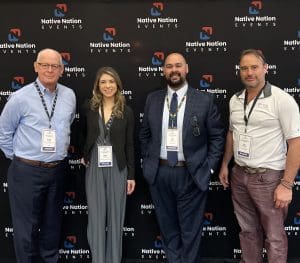
Attendees reflected positively on the experience, emphasizing both professional growth and relationship-building. Seth Hetherington called it “one of the most valuable” events he has attended, while Shawn Keep highlighted how “highly productive” the sessions were in fostering new connections. The Exchange once again demonstrated the value of peer-driven collaboration, leaving participants with actionable insights and a renewed commitment to excellence in Tribal gaming leadership.

June Shows 2025: One Location, Four Conferences, Endless Opportunities

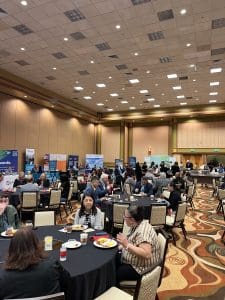
Over two days in June (10–11), attendees experienced a cross-industry hub of learning and networking at Pechanga Resort Casino in Temecula, CA. Professionals could move seamlessly between sessions in emergency management, economic development, healthcare, and cannabis & hemp, while sponsors connected with experts across all four industries. This dynamic format created unparalleled opportunities for sharing ideas, exploring best practices, and building meaningful connections.

Tribal Emergency Management Conference

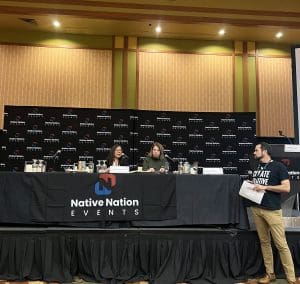
The Tribal Emergency Management Conference focused on enhancing preparedness, response, and resilience across Tribal communities. Sessions such as Mass Casualty: Prevention, Preparedness, and Response and Harnessing Technology and AI in Emergency Management provided participants with actionable strategies to improve emergency planning and response.

Feedback highlighted the conference’s practical impact. Scott Goodwin described it as “very educational,” and vendor Jo Miller noted the “fantastic conversations” that occurred throughout the event. Participants left equipped with new approaches to strengthen community resilience.

Native American Economic Development Conference

Celebrating its 18th year, the Economic Development Conference emphasized innovation, growth, and long-term Tribal economic resilience. Leaders shared success stories and strategic insights through panels, case studies, and interactive discussions. Sessions like Technology and Its Impact on Tribes and Turning Vision into Reality offered guidance on revenue diversification, community development, and strategic planning.

Attendees appreciated both the content and networking opportunities. Lauren Wasson praised the organization and exhibitor setup, while Avis Bill highlighted the actionable insights gained. The conference left participants with clear roadmaps to drive sustainable growth across Tribal economies.

Native American Healthcare Conference

The 15th Annual Native American Healthcare Conference brought together Tribal leaders and healthcare professionals to discuss reducing disparities, expanding preventative care, and integrating new technologies and infrastructure. Sessions such as Expanding Behavioral Health Care with New Technologies and Building a Modern Health Facility offered practical strategies and inspiration.

Participants valued the diversity of perspectives and networking opportunities. Courtney Schmidt described it as “a wonderful networking event,” while Nancy Jascula appreciated learning from leaders across different Tribal healthcare organizations. Attendees left motivated to implement strategies that could improve health outcomes in their communities.

Native American Cannabis & Hemp Conference

The 10th Native American Cannabis & Hemp Conference explored regulatory strategy, product quality, investment considerations, and market expansion within Tribal communities. Panels like State of Tribal Dispensaries and Growing Operations and Protecting Tribal Assets: Risk, Investment, and Financial Strategy offered in-depth insights from experienced practitioners.

Feedback emphasized the expertise shared by speakers. Jacob Sexton praised the informative sessions, while Yolanda Rogers noted the value of hearing firsthand experience. Attendees left empowered to navigate an evolving industry and build compliant, sustainable businesses in their communities.

Wrapping Up Part 1

The June Shows provided a dynamic, cross-industry learning experience, giving attendees unmatched opportunities to collaborate, share strategies, and explore new ideas. The first half of 2025 highlighted learning, collaboration, and meaningful connections across Tribal leadership and industry. From HR and casino leadership to healthcare, economic development, emergency management, and cannabis, thousands of professionals exchanged insights, strategies, and best practices. These events underscored the innovation, resilience, and strength of Native communities, setting the stage for an exceptional full-year experience.

Check out Part 2 for a recap of the programs and highlights from the second half of 2025.
Industry Updates

Key Takeaways from the 14th Annual Native American Human Resources Conference

February 19, 2024

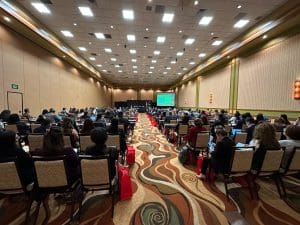
Delegates gathered from far and wide at the Pechanga Resort Casino in late January for the 14th Annual Native American Human Resources Conference. Over 200 representatives from tribal enterprises and over 100 industry partners participated in two days of sessions, networking, and fun. This year, attendees received 11 HRCI credit hours towards  aPHR™, aPHRi™, PHR®, PHRca®, SPHR®, GPHR®, PHRi™ and SPHRi™ designations.

The conference kicked off with an inspiring keynote address that discussed why HR leaders need to get themselves a seat at the table with the rest of the C-suite when it’s time for strategic business decisions to be made. The session brought the energy and set the tone for the exciting discoveries and conversations that were about to unfold over the next two days.

Next, the conference moved into the highly-anticipated session that discussed strategies for rebuilding and recruiting your workforce. Ruth Zaldivar, Human Resources Director from Muscogee Nation Gaming Enterprises, proudly discussed her team’s efforts to create more awareness about current job openings outside of typical platforms. She said they hired a social media manager to create videos about current job openings and event showcase content about seasonal activities. Before this newly-created position, there were no employment-specific social sites for the Muscogee Nation, and now they have a tremendous online presence with a pipeline full of candidates.

Before attendees broke for lunch, “Success Stories Behind Employee Longevity” delivered answers to some hard-hitting questions. Crystal Hill, National Director of Tribal Services of USI Consulting, Inc., remarked that specifically in tribal businesses, community recognition means the most and is the biggest factor in employee retention. Whether that’s a ceremony in front of other employees/tribal members or a callout in a tribal publication, it helps boost morale, and the employee feels like they are recognized beyond the workplace.

After lunch, attendees broke into sessions for more focused learning, choosing their own adventures. Preparing the Future of Your Organization’s session on succession planning to ensure a forward-thinking, structured process is in place to develop individuals within the organization who are driven to succeed in key leadership roles. Cynthia Jaramillo, Senior Human Resources Manager from Isleta Resort and Casino, remarked that it’s important to:

  • Identify competencies for key positions.
  • Develop a training program with mentors who provide hands-on job shadowing
  • When interviewing interested employees, address career plans and how your organization can support them
  • Consistently evaluate your program effectiveness

Day one ended with a can’t-miss roundtable on generational differences led by HR executives. Panelists shared humorous yet heartfelt anecdotes about their organizations and how their diverse workforces are learning to work together through all of their differences. An Tran, Vice President of Human Resources of the San Manual Band of Mission Indians, recommended to “[not] ignore commonalities between generations. There’s a tendency to have stereotypes and preconceived notions of individuals, which can negatively affect your organization.”

We kicked off Day Two refreshed and ready to learn all about AI! Julio Nunez, Human Resources Director from the Osage Nation, shared some very candid sentiments that left the crowd wanting more. He opened by defining AI: “Narrow AI and Strong AI. Narrow AI is what we’re mostly using right now, with Alexa and our iPhones. Strong AI is what Hollywood makes movies about AI becoming sentient. We are not quite there yet.” He then stated that AI can assist in personalized employee training once teams submit the correct prompts. Communication styles, personality tests, general likes, and dislikes can be input, and then custom training can be curated for a new hire. AI can enhance decision-making and HR policies by making data-driven decisions, predictive analytics for turnover, customized learning and development, and strategic workforce planning, but AI can never replace the human element of HR.

The tough topics didn’t stop there; next, we discussed the pros and cons of remote, hybrid, and in-person work and how enterprises can make it work for all employees. For this group, it’s a tricky subject as some parts of the team can work remotely while others must be in person or are customer-facing, and it can create a rift amongst smaller teams. Lynn Faraca-Bond, Senior Vice President of Human Resources from the San Manuel Band of Mission Indians, believes that if you manage a team that works in person, then you, as the leader, need to be in-person, too. Patrick Higgins, Senior Director of Human Resources for the Central Council of the Tlingit and Haida Tribes, had an interesting viewpoint, stating that they prioritize hiring tribal citizens and that regardless of timezone, all personnel must work on Alaskan time. He stated that they will continue to hire a remote workforce to support their notion of prioritizing the hiring of tribal members. 

After lunch, attendees went deep into discussion on the crowd-favorite topic, Employment Law Updates. Kehl Van Winkle from MCTLAW shared an in-house perspective, stating that he tries to approach things from a policy-first perspective. He shared with the audience that if you know the source of the laws that apply, you will have a healthier HR department and need legal departments less.

After this we moved into our discussion on Mental Health in the workplace and HR teams’ role in helping employees. This discussion was lively and extremely heartfelt, with panelists sharing stories of how progressive policies positively impacted their employees. Teresita Cowan, Benefits Manager from Muscogee Nation Gaming Enterprises, shared how HR professionals have a vital role to play in promoting mental health wellness at organizational and individual levels and that individual performance really impacts the organization. As HR leaders, we want to make sure we create an environment where someone struggling with mental health can come to HR and get the resources they need.

We wrapped up the 14th Annual Native American Human Resources Conference with the can’t-miss roundtable of HR Executives – Leading Through Challenging Times. Gary Burrs, Executive Officer of Human Resources from Choctaw Nation of Oklahoma, shared, “Human capital is the one thing organizations can do to be different from each other. It is important to understand that casinos sell the exact same product, and the human interaction is different.” A powerful thought to close out the conference. Many attendees came from a gaming-based business, asking the question of how they can make their team stand out. The answer was easy: it’s the people. They drive your success, build your culture, and are your greatest asset.

Stay tuned in the coming weeks as we announce the dates and location for the 15th Annual Native American Human Resources Conference. If you miss joining us this year, we sincerely hope you join us next year!

Industry Updates

3 Critical Strategies to Managing Talent

April 26, 2017

One of the most important things for Human Resources and Talent Management Professionals to recognize is the entirety of the employee life cycle.

Meeting the needs of employees at the following stages requires strategy, programing, procedure and accountability:

  • Recruiting & Hiring
  • Onboarding
  • Managing Performance
  • Training & Development
  • Promotion & Succession

But how do overextended (and sometimes understaffed!) HR departments tackle all of this?

The answer is simple: one step at a time.

You don’t have to have all of your bases covered, but you do have to know what the bases are and which ones need your attention.

Here are three strategies or approaches to consider:

Make Talent Management a separate function.

Organizations are starting to focus talent management efforts by making it its own function within, or related to Human Resources. When you have a staff all trying to do everything, a little bit of everything gets done. Evaluate the skills of people on your team.

  • Who is great at creating employee engagement or rewards programs?
  • Who engages with others with enthusiasm and has training experience?

If you want to manage talent, make it a point to define this as a concentrated effort, role or department.

Create a Training Plan

Training plans are critical for employees at all levels. From those onboarding into a new job to developing managers and leaders in areas of communication or conflict resolution –  you must first conduct a needs analysis. How do you do this? Finding out the training needs of employees is as simple as conducting an anonymous training needs survey. Employees will tell you EXACTLY what their needs are. Use the training survey to map out a training plan. Do what you can now with the resources you have, but take the first step.

Team Build, Team Build, Team Build

How often to provide opportunities for employees to engage and connect with each other? If you want to retain people, build relationships, increase organizational loyalty and build enthusiasm for coming to work, you MUST plan opportunities to team build. On a tight budget? Do something monthly and casual like a team lunch and ask people to make their favorite dish. Have more resources? Take your team to a 1-day team building training and watch the difference it makes in people working together productively.

Don’t go it alone. Get access to your own HR & Training Consultant by joining us for our Midwest Native American Human Resources Conference and Talent Management Training coming to Oklahoma City this October!

This unique and hands-on training forum is geared towards Human Resources Professionals interested in integrating the most cutting edge human capital management practices into their existing approach to hiring, training, and managing the performance of their workforce.

This is an incredible opportunity to bring your ENTIRE HR team to brainstorm on many of your talent management needs. You can team build with your department and come back home with a wealth of resources.

This training is limited to 75 participants and WE WILL SELL OUT. Check our agenda and get information about registering here.

Industry Updates

Why Tribal Leaders Should Explore Estate Planning

February 11, 2016

YOUR RESOUNDING “YES” TO ESTATE PLANNING SOUNDS LIKE PEACE OF MIND

netlawscreen-shot-2015-03-13-at-7-05-41-pmLast month, my team and I attended the Sixth Annual Native American Human Resources Conference, in Las Vegas, Nevada. As this was Netlaw’s first year with Native Nation Events, I was not sure what to expect. However, what evolved over the course of 3 days became an extraordinary experience that exceeded all my expectations.

Close to one hundred Human Resources professionals, tribal council members, and elders stopped by our NetLaw booth to learn about our online estate planning service. Within minutes on day one of opening our booth, a pattern emerged. Nearly everyone who talked to me and my team recounted a personal story about how estate planning either saved their family or the lack of planning caused them or someone they knew great pain and financial loss. What was additionally notable and impressive, was the overwhelming agreement among attendees who felt that our service would benefit their employees and tribe members. I was moved by the many leaders who want to help their tribal brothers and sisters get the legal and health documents we provide so that no tribe member or employee would find themselves in a position of sorrow and unnecessary angst when a loved one is hospitalized or passes away.

Your stories reaffirmed for me my commitment to offer affordable and comprehensive estate planning to everyone I meet. You shared with me how many people you know who do not have a Will or Living Trust in place, or if they do, it is out-of-date. You shared with me how increased numbers of funerals and probate cases are causing concern and begging for proactive measures.

Watch This Video to Learn How NetLaw Can Help You

I am hopeful that you will take a look at your own legal and health-related documents and contact your HR Director and/or Tribal Council leaders to see how they can help you get your comprehensive estate documents drafted. Below is a list of the basic estate planning documents most people need and that which comprises the NetLaw Premium Package. Use this as a guide and know I can be reached at 916-936-7692 to discuss the next steps in protecting yourself, your family, your assets, and your peace of mind.

The NetLaw Premium Estate Planning Package ($500)

  • Will (Including trusts for children/grandchildren)
  • Probate Avoidance Living Trust (includes guide for funding your Living Trust)
  • Living Will / Advance Directives
  • Healthcare Surrogate
  • HIPAA Authorization
  • Power of Attorney
  • Pet Trust
  • Access to an electronic vault to store and share your document
  • Access to the NetLaw, Inc. Attorney Network at a discounted rate
  • Unlimited revisions to your trust with an active NetLaw account
  • Your Spouses Documents are included for FREE!

About NetLaw, Inc.netlaw_logo_pfhandbook

NetLaw is a software created by Hargrove Madden, an estate planning law firm in Kentucky, with over 30 years Estate Planning experience. The tool was originally designed to streamline the documentation process for Hargrove Madden attorneys. The tool received awards from The American Bar Association for excellence in e-lawyering and subsequently became available to the public through NetLaw, Inc.

Offering an online destination for individuals and families to prepare, NetLaw stores and shares a personalized set of estate planning documents. NetLaw utilizes a process that allows individuals to establish estate planning documents easily and quickly from the comfort of your own home. The comprehensive package will create valid documents for all states, provide a cloud-storage platform and access to a network of specialized attorneys.

Assistance in document completion will be offered to those in need.

About Janiece Rustin

Intrigued by business, financial literacy and economic development, I have pursued a career in financial services, since 2013. I hold life and health licenses in California, Oregon and Washington and have been a NetLaw Associate offering comprehensive estate planning services to my clients nationally since the company launch in early 2015.

My goal is to ensure that all my clients have a clear and well established financial strategy for every stage of life which includes debt management, life insurance, retirement planning, VA benefits planning, and asset protection. Prior to my career in financial services I spent 10 years specializing in marketing for nonprofits and small businesses. In 2004, I received my Bachelor’s of Arts degree in English Literature from UC Berkeley. Later, in 2008, I and completed the UCLA MBA Fellows program earning awards in leadership.

Industry Updates

8 Tips to Make Your Emergency Plan Accessible & Effective

January 13, 2016

As the national conversation regarding violence in the workplace suggests a heightened awareness stemming from increased media coverage, recent studies suggest there may be statistical evidence supporting the frequency of these occurrences. According to the U.S. Bureau of Labor Statistics, about 5 percent of all businesses experience an instance of workplace violence each year. For larger organizations with more than 1,000 employees, this rate is increased to 50 percent.


How often do you think about security on the job?
Did you know that a majority of workers feel their office is a secure place to work?
Do your employees know what to do should there be an emergency situation?

Active threats and the environments in which they take place can vary from incident to incident. The common threads found can be woven together to create the fabric of an effective and successful safety program. You and your supervisors play an important role in promoting workplace safety and preventing workplace violence.

Join Willis Towers Watson HR Partner Consultants Marina Galatro and Sara Ritter on Friday, January 29th, in conjunction with Native Nation Events’ 6th Annual Native American Human Resources Conference starting January 27th in Las Vegas, NV. They’ll be discussing tools for building a solid foundation for a safety-minded workplace including recognizing potential threats, defusing violent situations, and training employees to follow proper security procedures.

8 Tips to Make Your Emergency Action Plan Accessible & Effective (Source: BLR)

1. Have each department review all pertinent parts of the plan to ensure accuracy and workability. Often, if one person is charged with writing the plan, he or she will write something that looks good on paper but may not work well when the time comes.
2. Do not store your action plan in electronic form only; make sure hard copies are readily available to key employees.
3. List the location of important utility shutoffs and include digital photos so they can be located quickly and easily.
4. List any equipment or machinery that must be shut down in an emergency and the names of those responsible for doing so.
5. Conduct periodic drills to gauge whether employees know what to do in an emergency.
6. Be sure to include provisions in your plan for visitors at your facility.
7. Since emergencies don’t always happen on Tuesdays at 10 a.m., when writing your plan, be sure to take into account variations in emergency procedures for differences in shifts or days of the week.
8. List locations of special equipment (for example, special protective suits to be used in the event of a chemical release) and emergency supplies (food, water, etc.) in the event employees are stranded at your site.